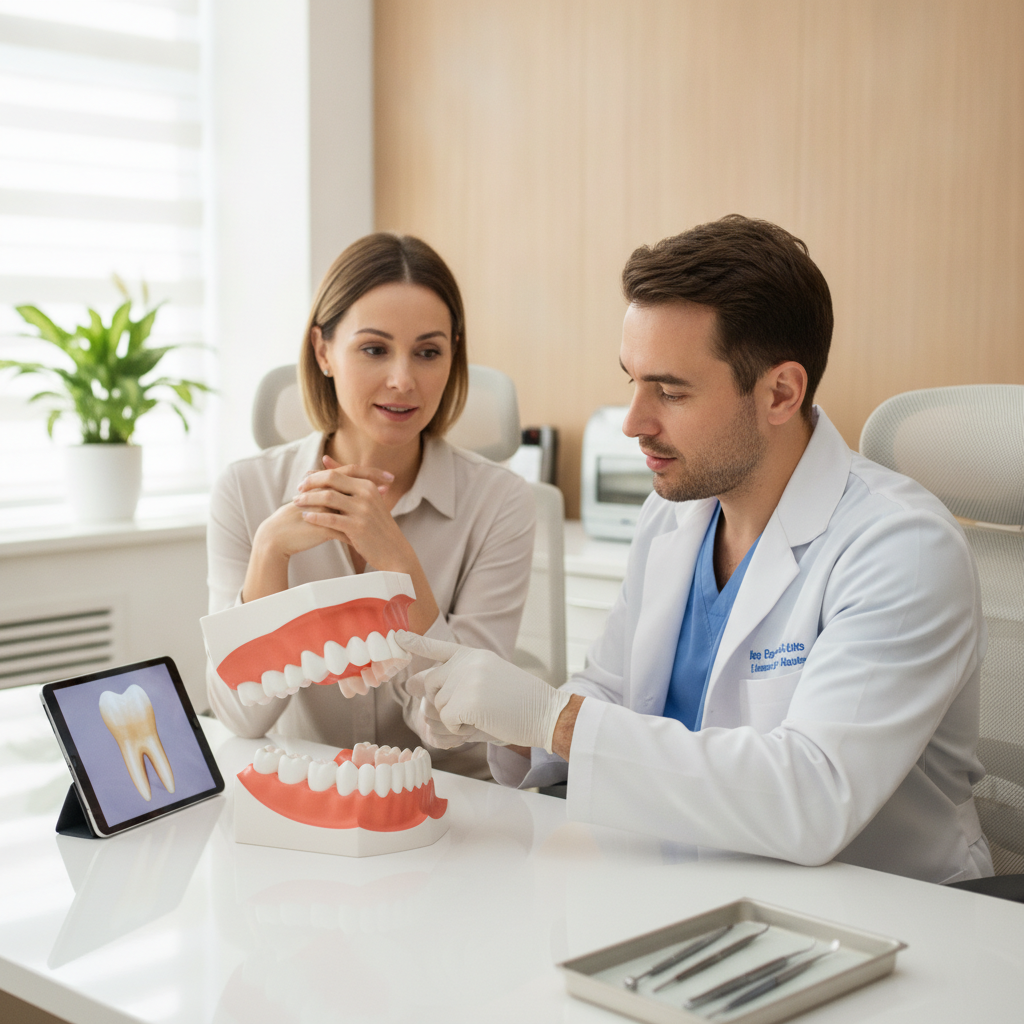
If you’ve ever wondered what are molar teeth and why your dentist pays so much attention to them, you’re not alone. They’re the big teeth in the back of your mouth that do the heavy lifting every time you chew a steak or crunch a carrot. When one hurts, you notice it right away.
At Sumter Landing Dental Care in The Villages, FL, we focus on affordable, complete smile restoration, and we want you to understand the teeth that keep your bite working.
What Are Molar Teeth?
Molar teeth are the large, flat teeth at the back of your mouth, built for grinding food. Adults usually have up to 12 molars, including wisdom teeth. They sit behind the premolars, and the first permanent molars come in around age six. Molars play a big part in breaking food down for digestion and in keeping your mouth healthy.
The Structure of Molar Teeth
Molars have several layers: hard enamel on the outside, dentin underneath, and the pulp in the center, which holds the nerves and blood vessels. Their roots, with canals running through them, anchor them in the jaw. Knowing these layers helps explain why molars are so strong and why a deep cavity in one can hurt so much.
Molar Functions and the Power Behind Your Bite
One of the main molar functions is chewing and grinding food so your body can digest it well. Molars also help keep your jaw aligned and give support and stability to the teeth next to them. When a molar is missing, nearby teeth can start to tip or drift into the space.
Why Molar Health Matters
Unhealthy molars can lead to real problems like toothaches, infections, and teeth shifting out of line. Keeping your molars healthy helps you avoid these issues and keep a confident smile that works the way it should.
Common Molar Problems
Because molars sit far back and do so much chewing, they’re prone to cavities, cracks, and gum disease. Their deep grooves trap food, and they’re harder to reach with a toothbrush. Regular checkups help catch these problems early, when they’re easier to fix.
Solutions for Damaged Molar Teeth
Options for fixing a damaged molar include fillings, crowns, root canal therapy, and extraction with a replacement.
Dental Fillings
Fillings repair small cavities using materials like tooth-colored resin or amalgam.
Crowns
Crowns cover and protect a weakened molar. They can be made of metal, porcelain, or ceramic, and at our office they’re crafted with help from an in-house dental lab.
Root Canal Therapy
A root canal saves a badly damaged tooth by cleaning out the infected pulp and sealing it. Afterward, a crown usually protects the tooth.
Extraction and Replacement Options
If a molar can’t be saved, we offer extractions followed by implants, zirconia fixed bridges, or dentures to restore function and appearance.
Preventing Molar Problems
Brush twice a day, floss daily, and keep up with regular dental visits to prevent molar problems. Angle your brush toward the back teeth and take your time there, since that’s where plaque likes to hide.
Molar Teeth and Full-Mouth Restoration
Molars play a key role in full-mouth reconstruction plans because they support your bite and help keep everything working together.
Advanced Dental Technology in Molar Treatment
At Sumter Landing Dental Care, we use modern equipment like a Cone Beam CT scan and an in-house 3D printer to plan treatment precisely. Our in-house dental lab helps us create restorations that fit well.
Patient Comfort and Sedation Options
Your comfort matters to us. We offer sedation options to help you feel relaxed and keep your visit as low-stress as possible.
FAQs About What Molar Teeth Are
Are molars the same as wisdom teeth?
Wisdom teeth are a type of molar, and they’re usually the last teeth to come in.
Can molars be replaced with implants?
Yes. We offer single implants and full-arch implant options.
How can I prevent cavities in my molars?
Good daily brushing and flossing and regular checkups are key.
Is a root canal painful?
With numbing, sedation options, and experienced care, discomfort is kept to a minimum.
Keeping Your Bite Strong for Years to Come
Healthy molars let you enjoy your favorite foods without a second thought. If you’re having molar trouble or want complete dental care, contact Sumter Landing Dental Care to schedule a consultation, and we’ll help with everything from “What are molar teeth?” to how to keep yours healthy.