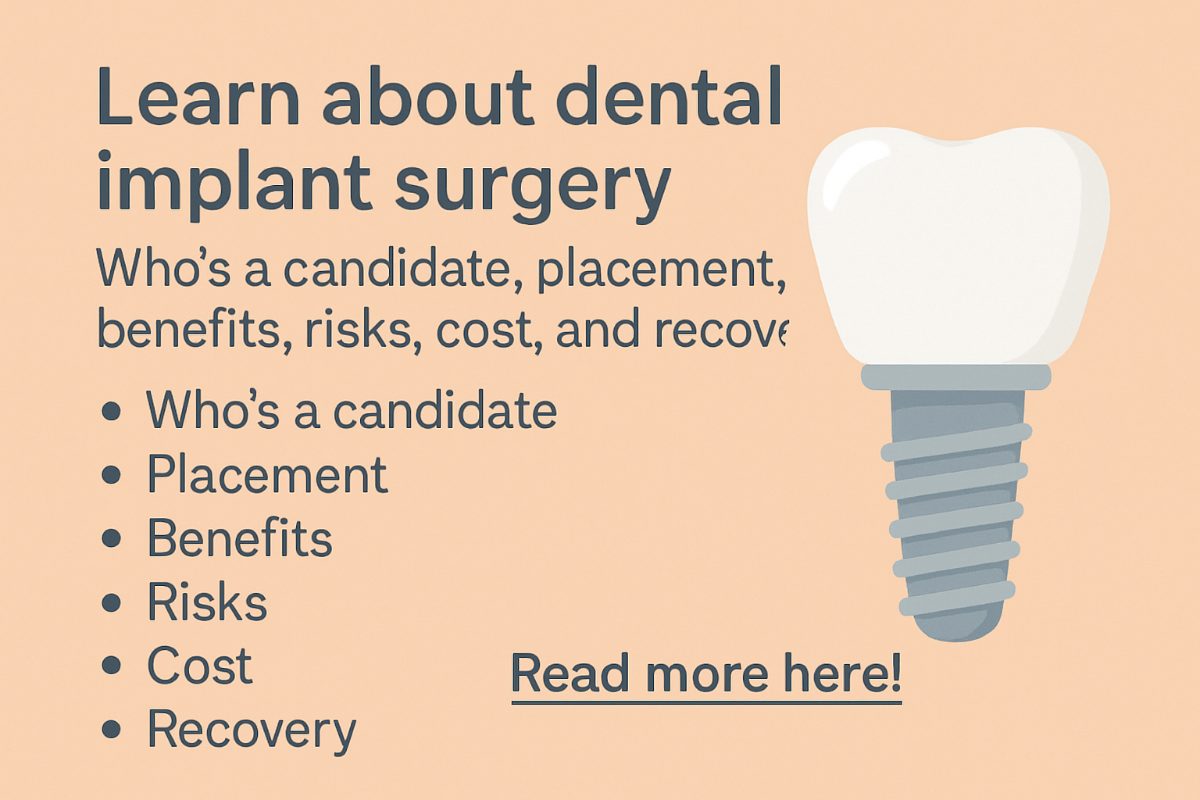
Many people call dental implants “screwed in teeth.” If you’re reading this, you’ll learn what “screwed in teeth” means, who can get them, how they’re placed, the benefits and risks, and what recovery looks like. This guide also explains how to find out if screwed in teeth in The Villages, FL are right for you and what to ask at your consult.
What are “screwed in teeth”?
“Screwed in teeth” refers to dental implants: a titanium screw placed into the jaw, an abutment that connects the screw to the visible tooth, and a crown that looks like a natural tooth. The titanium implant acts like a root and bonds with bone, giving strong support for chewing and speaking. People call them “screwed in teeth” because the metal implant is literally screwed into the jawbone. Many who get screwed in teeth in The Villages, FL find the result feels like natural teeth.
Who is a good candidate for dental implants?
Good candidates are adults who have:
- One or more missing teeth
- Difficulty with dentures or bridges
- Healthy gums and enough jawbone to support an implant
Some conditions need extra planning: heavy smoking, uncontrolled diabetes, certain medications (like some bone drugs), or severe bone loss. Older age alone is not a barrier. A dentist will review your medical history, scans, and habits to plan safe treatment for screwed in teeth.
Step-by-step: How dental implants are placed
Consultation and planning
First, you’ll have an exam, digital impressions, and CBCT 3D imaging. The 3D scan shows bone shape, nerves, and sinuses so the implant can be placed precisely. Good planning reduces surprises and helps determine whether you need bone grafts or can get immediate teeth. If you’re considering screwed in teeth in The Villages, FL, ask about CBCT and surgical guides at your consult.
Surgery and healing
During placement, the dentist gently places the titanium screw in the bone. Procedures are done with local anesthesia and often sedation for comfort. Some people get a temporary tooth the same day (immediate loading); others wait months for the implant to fuse with bone (delayed loading). Typical healing is 3–6 months, depending on bone quality and treatment type.
Final restoration
After healing, the abutment is attached and a crown or bridge is fitted. Options include single implants, multiple implants, or full-arch solutions like implant-supported dentures. Many practices now offer same- or next-day smile options for faster results. Talk with your dentist about whether immediate or delayed restoration is best for your case of screwed in teeth.
Benefits and risks of dental implants
Major benefits:
- Stable chewing and stronger bite
- Long lifespan when cared for properly
- Preserve jawbone and facial structure
- Improved confidence and speech
Common risks and how they’re minimized:
- Infection — minimized with sterile technique and antibiotics when needed
- Implant failure — reduced by good planning, proper placement, and patient care
- Need for bone grafts — planned ahead with CBCT scans
- Minor nerve or sinus issues — avoided through careful imaging and surgical guides
Cost, recovery, and what to expect after getting screwed in teeth
Cost factors include number of implants, need for bone grafts or sinus lifts, quality of the final crowns or bridges, and lab or digital workflow. Recovery tips:
- Expect mild to moderate soreness for a few days; use prescribed or OTC pain meds as advised
- Soft-food diet for the first week or as directed
- Keep the area clean with gentle rinses; avoid smoking
- Attend follow-up visits for checks and x-rays
Most patients return to normal activities within a few days, with full integration of the implant taking a few months.
Why choose Sumter Landing Dental Care for dental implants?
Sumter Landing Dental Care offers in-house CBCT for exact planning, a large on-site dental laboratory, and 3D printing for precise surgical guides and faster restorations. The clinic provides same- or next-day full-mouth options and sedation dentistry to reduce anxiety. Dr. David Price and Dr. Anil Patel bring years of implant experience and ongoing training to deliver predictable results with a patient-first approach.
Next steps: Learn if screwed in teeth are right for you
If you’re curious about screwed in teeth in The Villages, FL, schedule a consultation to review your scan and options. Sumter Landing Dental Care offers online scheduling, financing plans, and clear explanations of technology like CBCT and in-house lab work. Ask about same- or next-day options and sedation when you book your visit.