Dental implants are a durable way to replace missing teeth. Many patients search “implants teeth side effects” because they want to know what’s normal after surgery and what needs urgent care. This article separates common, short-term effects from rarer complications, and gives clear next steps so you know when to seek help.
Typical, short-term implants teeth side effects after surgery
Expect some pain and swelling for the first few days after implant placement. This discomfort usually improves with ice, over-the-counter pain relievers, and a soft diet. Minor bleeding and bruising are common in the first 24–72 hours; biting on gauze and avoiding strenuous activity helps. You may also notice temporary numbness or an altered taste in your mouth as swelling goes down. These short-term implants teeth side effects in The Villages, FL typically resolve within a week or two.
Less common but important complications to watch for
Infection around the implant, known as peri-implantitis, can develop if bacteria collect at the implant site. Look for increasing pain, bad taste, pus, or worsening swelling. Early treatment with antibiotics and improved hygiene often controls it. Implant failure or lack of osseointegration (the implant not bonding to bone) is less common; signs include persistent pain or a loose implant. Risk factors include smoking, uncontrolled diabetes, and poor bone quality. Nerve injury or prolonged numbness, and sinus complications for upper implants, are rare but may need prompt specialist care if symptoms persist or worsen.
Myths vs. facts about implants teeth side effects
Myth: Implants cause metal poisoning or interfere with medical devices. Fact: modern implants are biocompatible titanium or zirconia and do not cause metal poisoning or routine device interference. Myth: Implants always lead to bone loss. Fact: properly placed implants actually help preserve bone when patients keep good oral hygiene. Myth: same-day teeth mean higher complication risk. Fact: immediate restorations can be safe for many patients when clinicians use careful planning and technology. If you’re searching for “implants teeth side effects in The Villages, FL,” knowing these facts helps separate fear from reality.
How to reduce your risk of side effects
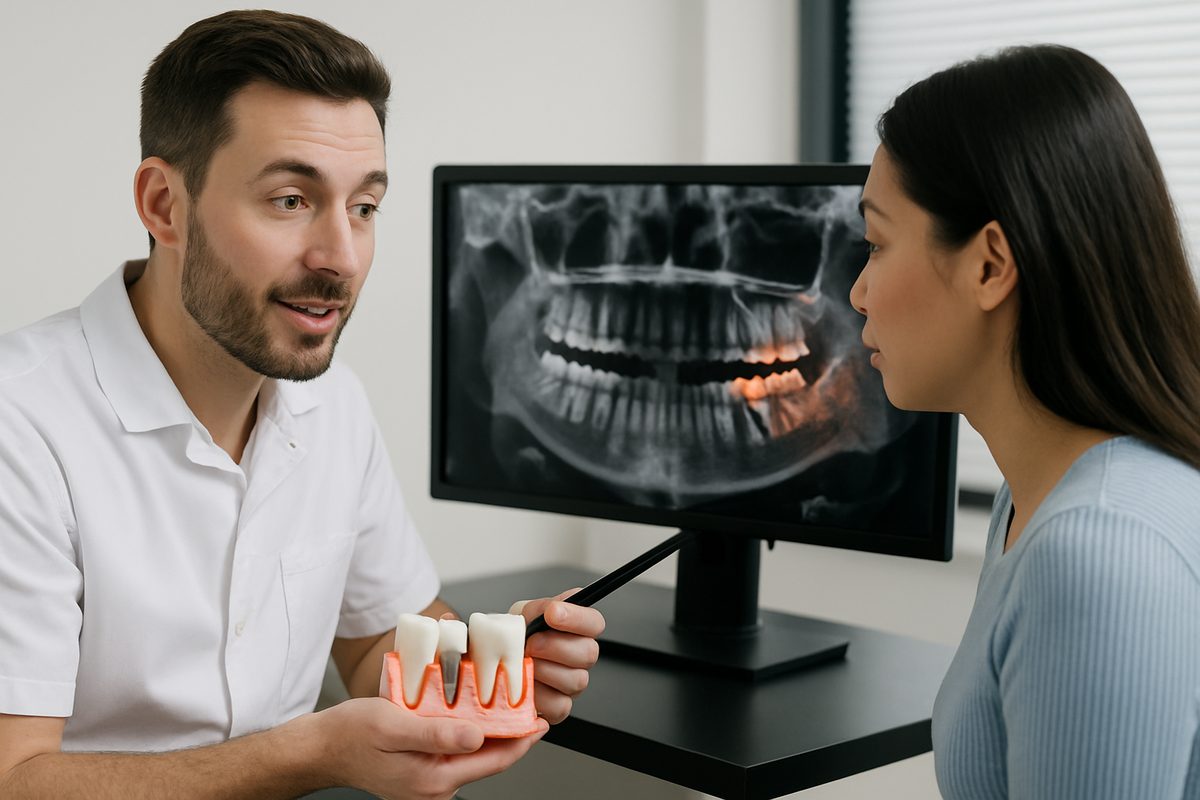
Prepare before surgery by optimizing health: control diabetes, stop smoking, and review medications with your dentist. Precise planning with CBCT scans, surgical guides, and 3D printing reduces placement errors and lowers complication risk. After surgery, follow post-op instructions, maintain excellent oral hygiene, and attend regular check-ups so small problems don’t become big ones. These steps cut down the chance of long-term implants teeth side effects.
When to contact your dentist about implants teeth side effects
Contact your dentist if you have uncontrolled pain, spreading swelling, fever, persistent numbness, a loose implant, or heavy bleeding. Clinicians evaluate problems with a clinical exam and imaging (X-rays or CBCT) and may recommend antibiotics, revision surgery, or grafting depending on the issue.
Why trust a modern implant team
Sumter Landing Dental Care in The Villages, FL uses CBCT imaging, an in-house lab, and 3D printing to plan implants precisely and speed up care. Dr. David Price and Dr. Anil Patel offer decades of implant experience, sedation options for comfort, and financing to improve access. Their approach aims to reduce common implants teeth side effects in The Villages, FL and manage complications quickly when they occur. Most implants teeth side effects are mild and temporary. If you’re worried or have a complicated case, schedule a consultation to get a personalized plan and clear next steps.