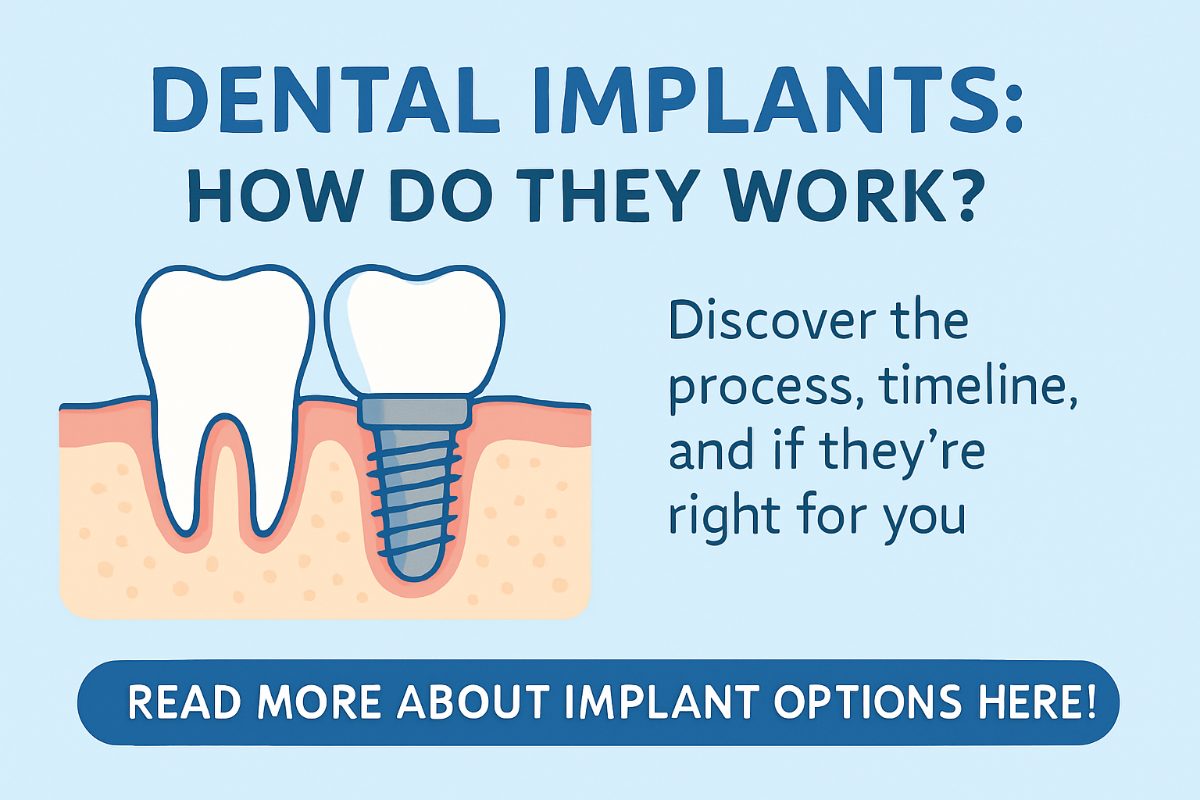
If you’re asking “dental implants how does it work,” this short guide by The Villages, FL experts gives a clear, step‑by‑step answer. Implants replace missing teeth with a metal root, a connector, and a crown so the result looks and functions like a real tooth. This guide explains the steps, typical timeline, common risks, and practical next steps. Dental implants are a safe, well‑studied option when placed by trained teams.
Dental implants how does it work — the basics
At its simplest, a dental implant is a replacement tooth root that supports a new visible tooth. The most common root is a titanium post placed into the jawbone. Over time the bone fuses to the post. An abutment connects the post to a crown, bridge, or full‑arch prosthesis. Because the implant is anchored in bone, it feels and functions more like a natural tooth than a denture.
Many people ask “dental implants how does it work in The Villages, FL?” The answer is the same everywhere: the implant creates a stable foundation so you can chew, speak, and smile with confidence.
The three main parts of an implant
The implant (root)
The implant body is the screw‑like piece placed into bone. Titanium and some zirconia implants bond with bone through a process called osseointegration. That bond creates a strong, durable root that can last decades with proper care.
The abutment
The abutment is a small connector that attaches to the implant and holds the crown or prosthesis. It ensures a secure fit and correct position for the visible tooth.
The crown or prosthesis
The crown is the visible tooth. Options include a single crown, a bridge that spans multiple teeth, or a full‑arch prosthesis like All‑on‑4. Materials vary from strong porcelain to hybrid acrylic for full arches. The choice depends on function, cost, and patient needs.
Dental implants how does it work by The Villages, FL — step‑by‑step care process
Consultation & planning
First, the dentist examines your mouth, reviews health history, and takes images. CBCT 3D imaging and digital impressions allow precise planning. A clear plan shows where implants will go and whether bone grafts or extractions are needed.
Surgery: placing the implant
Implant placement is usually an outpatient procedure. Local anesthesia and options like oral or IV sedation help keep patients comfortable. The surgeon places the implant into the bone; the procedure often takes under an hour for a single implant.
Healing and osseointegration
After placement the bone needs time to fuse to the implant. This osseointegration usually takes 2–4 months. During healing you may receive a temporary crown or denture so you don’t go without teeth.
Final restoration
When the implant is stable, the abutment and final crown or prosthesis are attached. The dentist checks fit, bite, and appearance, then makes small adjustments so chewing feels natural.
Who is a good candidate and when implants aren’t right
Good candidates have healthy gums and enough bone to hold an implant. Chronic conditions like uncontrolled diabetes, heavy smoking, or certain medications can lower success. If implants aren’t suitable, alternatives include bridges or dentures. A 3D scan and exam determine the best path.
Risks, recovery, and daily care
Common risks are infection, slow healing, or implant failure. Most patients have mild pain for a few days that responds to over‑the‑counter or prescribed pain relief. Daily care is like natural teeth: brush twice, floss, and see the dentist regularly. Avoid smoking and keep control of medical conditions to protect implants.
How long it takes and what affects cost
Typical timeline: consult and imaging (week 1), surgery (week 2–4), healing (2–4 months), final crown (after healing). Factors that change time and cost include number of implants, need for bone grafts, full‑arch vs single tooth, material choice, and sedation. Same‑ or next‑day options are possible for some patients with in‑house labs and guided surgery.
Why choose Sumter Landing Dental Care for implant care
Sumter Landing Dental Care in The Villages, FL offers experienced doctors, including Dr. David Price and Dr. Anil Patel, with advanced in‑house technology. Their CBCT planning, on‑site lab, and 3D printing speed treatment and improve accuracy. Sedation options help patients stay calm during surgery. These capabilities support predictable results and faster turnaround for patients asking “dental implants how does it work in The Villages, FL.”
Next steps: scheduling, financing, and questions to ask
To learn more, schedule a consult online or by phone. Many practices offer financing or phased plans to spread cost. Bring your questions. Five quick questions to ask at your first implant appointment:
- How many implants do I need and why?
- Do you use CBCT 3D imaging and guided surgery?
- Will I need bone grafts or extractions?
- What are my temporary tooth options during healing?
- What are the total costs and financing options?
Ready to find out “dental implants how does it work” for your mouth? Schedule a consult with Sumter Landing Dental Care in The Villages, FL for a personalized treatment plan and clear next steps.