If you’re asking how do implant teeth work, this plain-language 2025 guide will walk you through the basics, the treatment steps, who is a good candidate, common risks, timing and costs, and why modern technology matters. Read on to learn practical next steps and how to discuss options with a dentist if you live in The Villages, FL or nearby.
What implant teeth are: the three main parts
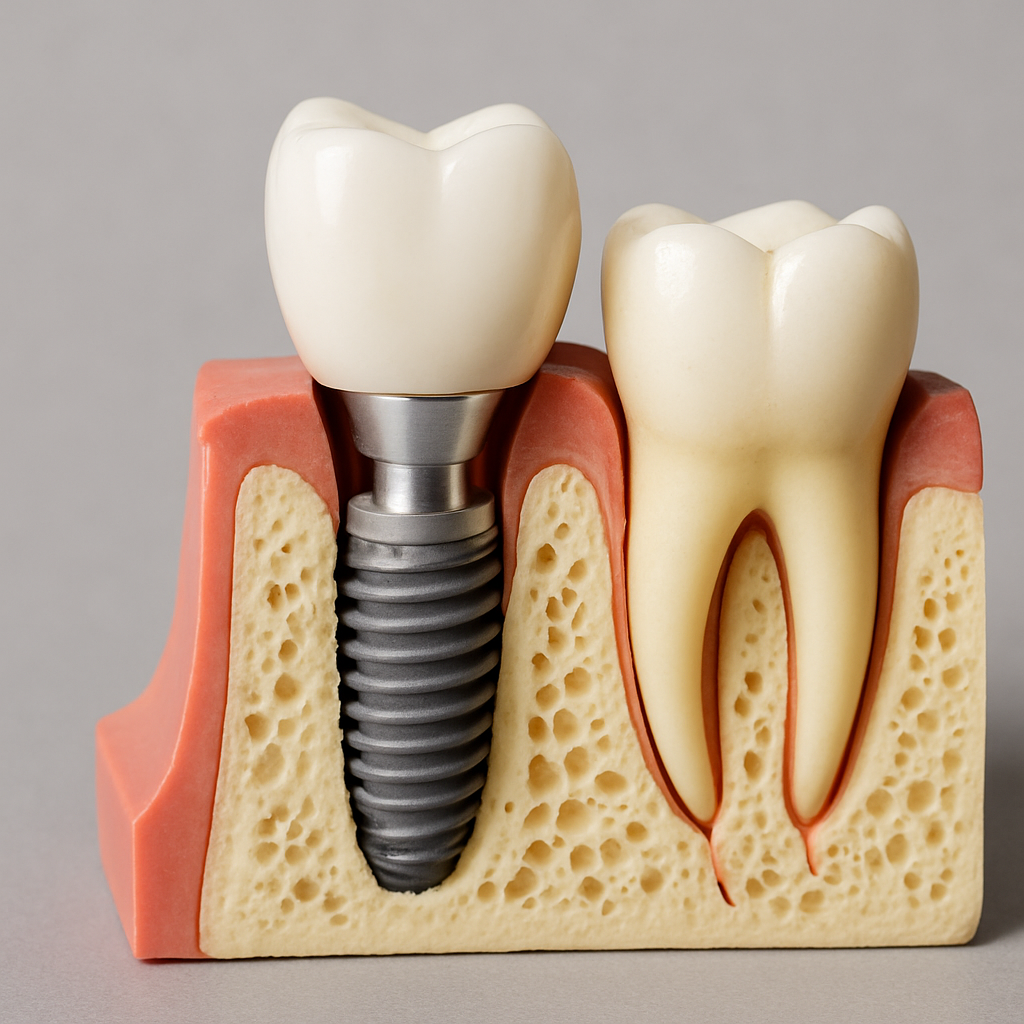
Implant teeth are a three-part system that replaces a lost tooth from root to crown. Think of it like a table:
- Implant post (root) – a titanium screw placed into the jawbone that acts like a tooth root. It’s the table leg that holds everything stable.
- Abutment (connector) – a small connector that sits on the implant and links the post to the visible tooth. It’s like the bracket that attaches the tabletop to the leg.
- Crown (visible tooth) – the custom-made porcelain or ceramic tooth that shows when you smile and chews food. This is the tabletop everyone sees and uses.
These parts explain in simple terms how do implant teeth work: the post becomes part of the bone, the abutment connects, and the crown restores function and appearance.
How do implant teeth work: step-by-step treatment process
Consultation and planning
First, the dentist examines your mouth, takes X-rays and often a 3D CBCT scan to view bone and anatomy. Good planning maps where implants will go, avoids nerves and sinuses, and predicts the final look. Clear planning answers the question: how do implant teeth work for your mouth.
Surgical placement
During surgery a dentist places the implant post into the jawbone. This is done with local anesthesia or sedation if needed. After placement you’ll get aftercare instructions for short-term pain control and hygiene. Most people manage with over-the-counter pain medicine and rest for a few days.
Healing and osseointegration
Over weeks to months the bone grows around the implant in a process called osseointegration. This creates a strong, stable bond — why implants feel more like natural teeth than dentures. Proper healing is the key reason implants work long-term.
Final restoration
Once healed, the dentist places the abutment and then attaches the custom crown or bridge. The crown is shaped and colored to match your other teeth. At this point the implant looks, feels, and functions like a natural tooth.
Who is a good candidate and common limitations
Good candidates are adults in good general health who have sufficient jawbone and healthy gums. Common factors that can limit implants include:
- Significant bone loss in the jaw (may need bone grafts or a sinus lift)
- Uncontrolled chronic conditions like diabetes
- Heavy smoking or tobacco use
- Poor oral hygiene or untreated gum disease
Many people with limits can still get implants with additional procedures or medical control. Ask a provider for a personalized evaluation.
Benefits and potential risks
Main benefits of implant teeth:
- Strong chewing ability close to natural teeth
- Natural appearance and better confidence
- Bone preservation where the tooth root used to be
- Long-term durability with proper care
Common risks or complications:
- Infection at the implant site
- Failure to fuse to bone (implant failure)
- Need for revision or replacement
- Temporary nerve irritation or sinus issues in some cases
Typical timeline and same-day options
Traditional timelines typically run from 3 to 6 months or longer from consult to final crown, depending on healing and bone needs. Some practices offer immediate or same-day loading where a temporary tooth is placed the same day as the implant. Immediate options can speed results but depend on bone quality and case planning. Expect mild soreness after surgery and follow-up visits to monitor healing.
Costs, insurance, and payment options (brief)
Cost depends on the number of implants, need for grafts, type of restoration, and technology used. Many dental plans offer limited coverage for implants, and financing or monthly payment plans are commonly available to spread cost. A consult will provide an itemized estimate and payment choices.
Choosing the right provider and why technology matters
Technology improves safety and outcomes. CBCT 3D imaging shows bone volume and vital anatomy. Digital planning and 3D-printed surgical guides help place implants precisely. In-house labs and 3D printing speed restorations and give tighter quality control. Ask a provider about these tools when you discuss how do implant teeth work in your situation.
About Sumter Landing Dental Care and the doctors
Sumter Landing Dental Care in The Villages, FL offers comprehensive implant care with an in-house dental lab and 3D printing for faster, precise results. Dr. David Price and Dr. Anil Patel focus on predictable implant treatments, full-mouth reconstructions, and comfort options including sedation. Their approach emphasizes planning, modern technology like CBCT, and restoring long-term function.
Next steps / call to action
If you want to learn specifically how do implant teeth work in The Villages, FL for your mouth, schedule a consultation to review imaging and options. Contact Sumter Landing Dental Care to book an exam, discuss financing, and get a personalized treatment plan.